- Cybersecurity
-
-
PARTNERS
- Homeland Security
-
-
HOMELAND SECURITY
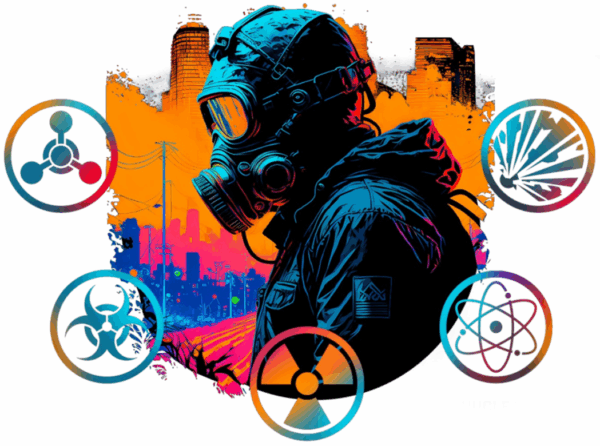
Chemical. Biological. Radiological. Nuclear. Explosive. WMDs. Asymmetric Threats.
The CBRNE-WMD credentials program is a robust training series designed to prepare early and developing professionals for the complexities of a dynamic and evolving threat environment. Three interdependent certificates that deal with policy, mitigation, and emerging threats will propel you towards an immersive capstone in Washington, D.C. and the next steps in your career protecting our nation.

-
-
CBRNE Awareness for Healthcare and Public Healthcare Providers
Master CBRNE Readiness: 10 Hours to Frontline Impact
Healthcare and public health facilities may be among the first places to recognize a high-consequence CBRNE event. This awareness micro-credential uses scenarios to help learners identify clinical and epidemiologic warning signs, protect the facility threshold, initiate notifications, and coordinate with trained response partners. Learners will compare exposure pathways, the limits of protective equipment, and initial decontamination decisions. Hands-on proficiency in respirator use, patient decontamination, and clinical interventions requires supervised training and assessment beyond this online course.
ABOUT THIS COURSE
CBRNE Awareness for Healthcare and Public Health Providers is a scenario-based micro-credential for frontline medical, infection prevention, laboratory, and public health personnel. Learners will recognize potential Chemical, Biological, Radiological, Nuclear, and Explosive hazards; describe initial protective actions; and communicate objective findings to the people responsible for clinical care, facility operations, public health, and emergency response. Scenarios teach learners when to isolate a potential contamination pathway, request qualified first-receiver or HazMat assistance, and distinguish urgent patient stabilization from more detailed decontamination. The course prepares participants to make role-appropriate awareness decisions under their organization’s emergency operations plan. It does not, by itself, qualify someone for hazardous-area entry, independent respirator selection, technical decontamination, or antidote administration. Confirm the advertised ten-hour duration by timing the published learner path, including interactions and the final assessment.
Overview
Modality
Online
Format
Asynchronous
Pricing
$290.00
Partner
RevU
Topic
General
COURSE REQUIREMENTS
There are no prerequisites for this micro-credential.
COURSE SYLLABUS
Module 1: Recognizing the Threat
- HazMat vs. CBRNE: Shifting to Consequence Management
- CBRNE Agent Profiles & Threat Analysis
- Toxic Overdoses vs. High-Consequence Synthetic Opioid Events
- Biological, Radiological, Nuclear, and Explosive (BRNE) Hazard Profiles
- Exposure Pathways, Dose-Response, and Population Impacts
- CBRNE Terminology and Standardized Frameworks
Module 2: Recognizing the Pattern and the Patient
- Frontline Toxidrome Recognition
- Distinguishing Natural Outbreaks from Intentional Biological Releases
- Radiological Indicators vs. Blast Injury Polytrauma
- Biological Events: Natural Outbreaks vs. Intentional Releases
- Laboratory Coordination & Notification Pathways
Module 3: Understanding Exposure and Protecting People
- Exposure Pathways and their Direct Clinical Implications
- The Hierarchy of Controls: Isolating the Facility
- Personal Protective Equipment (PPE) Envelopes and Limitations
- Decontamination Methodologies: Gross, Technical, Dry, and Hybrid Options
Module 4: Coordinating the Response
- The Coordination lifeline: Healthcare, Public Health, and Regional Coalitions
- Information Sharing, Surveillance, and Laboratory Coordination
- Command Structures: Implementing HICS & Unified Command
- Consequence Management: Countermeasures, Surges, and CBRNE Annexes
- Crisis Communication, Public Messaging, and Rumor Control
Module 5: Multi-Pathway CBRNE Healthcare Scenario
RELATED COURSES
Come Explore What GW RevU Can Offer You

Georgie
- Homeland Security
-
-