- Cybersecurity
-
-
PARTNERS
- Homeland Security
-
-
HOMELAND SECURITY
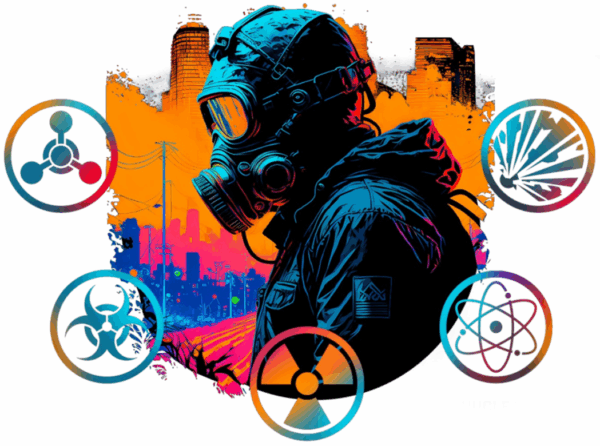
Chemical. Biological. Radiological. Nuclear. Explosive. WMDs. Asymmetric Threats.
The CBRNE-WMD credentials program is a robust training series designed to prepare early and developing professionals for the complexities of a dynamic and evolving threat environment. Three interdependent certificates that deal with policy, mitigation, and emerging threats will propel you towards an immersive capstone in Washington, D.C. and the next steps in your career protecting our nation.

-
-
CBRNE Awareness for First Responders
CBRNE Awareness for First Responders prepares frontline emergency responders to recognize, assess, and safely respond to incidents involving Chemical, Biological, Radiological, Nuclear, and Explosive (CBRNE) hazards. Through realistic scenarios, historical case studies, and operational decision-making exercises, learners develop the situational awareness necessary to identify potential CBRNE incidents, protect themselves and others, and initiate appropriate response actions. Designed for firefighters, EMS personnel, law enforcement officers, emergency managers, HazMat personnel, USAR teams, and other public safety professionals, this credential bridges the gap between routine emergency response and high-consequence CBRNE events.
ABOUT THIS COURSE
CBRNE Awareness for First Responders is a 10-hour professional micro-credential developed by The George Washington University to strengthen frontline responder preparedness for low-frequency, high-consequence incidents involving chemical, biological, radiological, nuclear, and explosive hazards. Drawing upon nationally recognized doctrine, historical case studies, and operational best practices, this credential equips learners with the knowledge and decision-making framework necessary to recognize unusual hazards, protect responders and the public, and coordinate effectively with specialized response assets.
Unlike technician-level HazMat or CBRNE training, this credential focuses on awareness-level competencies that every responder should possess regardless of discipline. Learners explore the modern threat environment, understand the characteristics of each CBRNE hazard category, identify early indicators of emerging incidents, and apply evidence-based protective actions during the critical first minutes of an emergency.
Throughout the credential, participants examine real-world incidents—including the Goiânia radiological accident, the Tokyo Sarin attack, the 2001 Anthrax attacks, the COVID-19 pandemic, and the Beirut explosion—to understand how historical events continue to shape emergency response doctrine. Scenario-based learning encourages learners to apply principles of scene assessment, responder safety, incident command, interagency coordination, and risk-informed decision-making in increasingly complex operational environments.
By the end of the credential, learners will be able to distinguish routine hazardous materials incidents from potential CBRNE events, recognize indicators that require escalation, coordinate with technical specialists and partner agencies, and support an integrated response consistent with the National Incident Management System (NIMS) and Incident Command System (ICS).
Overview
Modality
Online
Format
Asynchronous
Pricing
$290.00
Partner
RevU
Topic
General
Information Technology and Engineering
COURSE REQUIREMENTS
There are no prerequisites to take this micro-credential.
COURSE SYLLABUS
Module 1: CBRNE Fundamentals for First Responders
- Understanding Today’s CBRNE Threat Environment
- The First Responder’s Role
- Understanding the CBRNE Spectrum
- Recognizing Chemical and Biological Hazards
- Recognizing Radiological, Nuclear, and Explosive Hazards
- HazMat or Potential CBRNE?
- Exposure Pathways and Dissemination Methods
Module 2: Recognizing CBRNE Incidents
- Building Situational Awareness
- Environmental and Physical Indicators
- Casualty Patterns and Medical Indicators
- Conducting an Awareness-Level Risk Assessment
- Interpreting Conflicting Information
- Notifications and Resource Requests
Module 3: Immediate Protective Actions and Scene Safety
- Understanding and Establishing Control Zones
- Initial Isolation, Evacuation, and Shelter-in-Place Decisions
- PPE Levels and Respiratory Considerations
- Minimizing Secondary Contamination of Responders, Equipment, and Facilities
Module 4: Coordinating with HazMat, CBRNE, and Medical Assets
- ICS/NIMS Integration and Unified Command
- Working with Specialized HazMat, CBRNE, and EOD Assets
- EMS Coordination, Triage, and Casualty Movement
- Public Health Integration, Countermeasures, and Epidemiological Surveillance
- Scene Security, Evidence Preservation, and Law Enforcement Integration
Module 5: Applying CBRNE Awareness in Scenarios and Exercises
- Scenario-based Application: Transportation, Public Venue, and Fixed-Facility Events
- Freestanding Scenario Applications: Wide-Area Incident Drills
- Role-Specific Decision-Making and Crisis Communications in Multi-Agency Responses
- After-Action Reviews, Continuous Preparedness, and Agency Readiness
RELATED COURSES
Come Explore What GW RevU Can Offer You

Georgie
- Homeland Security
-
-